Google Plans First Test of AI Chips in Space Under Project Suncatcher
One of the main goals is to determine whether the chips can withstand the stresses of launch, radiation and extreme temperatures
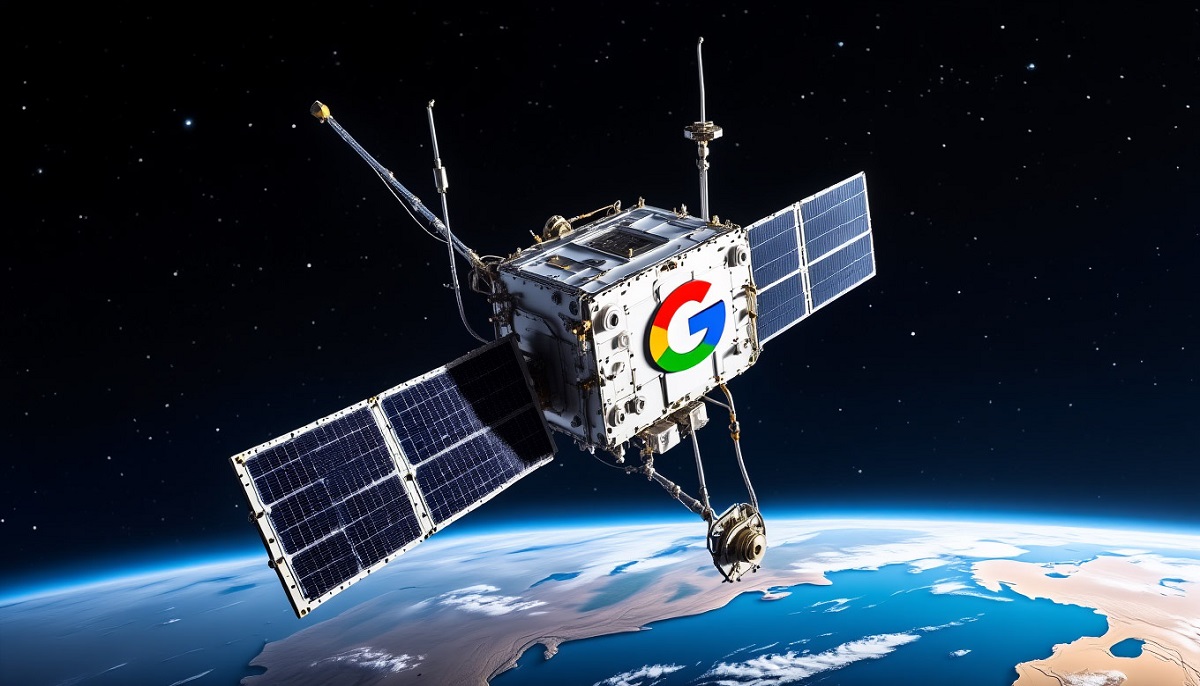
Google is planning to launch a test satellite next week to begin what's billed as the first in orbit experiment of Project Suncatcher, a project designed to determine whether AI supercomputing hardware could be built in space.
The mission is set to launch on board SpaceX's next Transporter-18 rideshare mission, which it's launching alongside satellite firm Planet Labs. The prototype will deliver Google's Tensor Processing Units into low Earth orbit - where engineers can observe the performance of the AI hardware in space.
The other major challenge is to prove that the chips will survive launch, radiation and temperature extremes. Space radiation can interfere with the electronic systems that run computers and even cause errors in the form of flipped bits, so any orbiter using a future computer network would have to be reliable.
Google has previously carried out ground radiation testing of TPUs running AIs at the University of California, Davis. The company has said it needs a real orbital mission to gather data that can't be duplicated on Earth.
Moving to cooling will be another huge challenge. While airflow in earthly data centers can carry off heat from the dense arrays of fast processors, vacuum inside a satellite's environment would make it impossible. Google intends to test a system that uses heat pipes and radiators to vent heat away from the chips.
Google introduced Project Suncatcher in 2025 as a decades-long research project made up of a network of solar-powered satellites with TPUs linked by free-space optical communications. The satellite company imagines interconnected clusters of satellites that could one day provide teraflops of AI computing power while harnessing solar energy in space.
Google also pointed out that the next mission will not be a proof of a working orbital data center. Rather, it will be used to collect data and to locate possible technical failure points. Google said it will launch two more satellites in 2027 to test high-bandwidth laser links, which would be used to connect future computing clusters.
But hurdles still need to be overcome before a system like this could be a commercially viable solution. According to an industry expert, launch costs, manufacturing of satellites, protection from radiation, temperature regulation and communications pose key challenges.
Nevertheless, the orbital launch represents an important milestone for Google's exploration of space-based AI infrastructure, as other technology companies are now also looking at options for avoiding the energy and physical footprint of on-earth data centers.