Google Releases a New Local-First Granola Competitor
Google has released AI Edge Foresight, a new local-first meeting note-taking app that competes with Granola by processing conversations directly on a

Google has announced a new AI-enabled meeting note-taking app called Google AI Edge Foresight, and it's being billed as a local-first alternative to popular apps like Granola.
The Mac application uses Google's on-device Embedding Gemma 2 model to run conversations locally. This model of 740 million parameters enables Foresight to transcribe meetings and generate notes while keeping the meeting audio within your device.
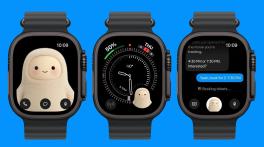
The style bears similarities to Granola, which has earned itself a following with a notepad-style tool that transcribes meetings in the background rather than having to have a meeting bot join the call. Granola has made its way to Mac, Windows, iOS, Android and the Apple Watch and has shifted more toward providing workplace context to notes from a meeting.
Foresight is like a side-by-side screen in which users can jot down their own shorthand notes while the AI makes its own version of the meeting notes. They can also open the transcript of the meeting and chat with an AI assistant to ask questions.
But, it doesn't stop there. You can upload documents and other content to build your own knowledge base. This can encompass PDFs, Google Docs, Microsoft Office documents, plain text, Markdown documents and web bookmarks. The AI can then draw on these resources in conjunction with meeting notes to respond to queries on the fly.
Another key advantage is that the software is optimized for Apple Silicon and it functions offline. Those features could really appeal to those who need to work with sensitive data, or if you need to access your meeting notes on the road with not Wi-Fi available.
This news follows the fierce competition for note-taking with AI. Google previously announced that it has integrated Gemini's "Take notes for me" inside Google Meet to transcribe and analyze meetings, noting action items and saving summaries to Google Drive.
However, foresight seems to have a different role which is to demonstrate what Google's miniature on-device Gemma models can do without the cloud.
The new app currently seems to be a test release, rather than a standalone rival to Google's comprehensive suite of Gemini productivity software. Still, its local-first architecture underscores an emerging strategic for AI software that companies are exploring to deliver a more powerful assistant, with more privacy, offline availability and less reliance on the cloud.