Waymo to Launch Autonomous Ride-Hailing in Madrid Next Year
Waymo plans to launch a fully autonomous ride-hailing service in Madrid in 2027, marking its first expansion into Spain
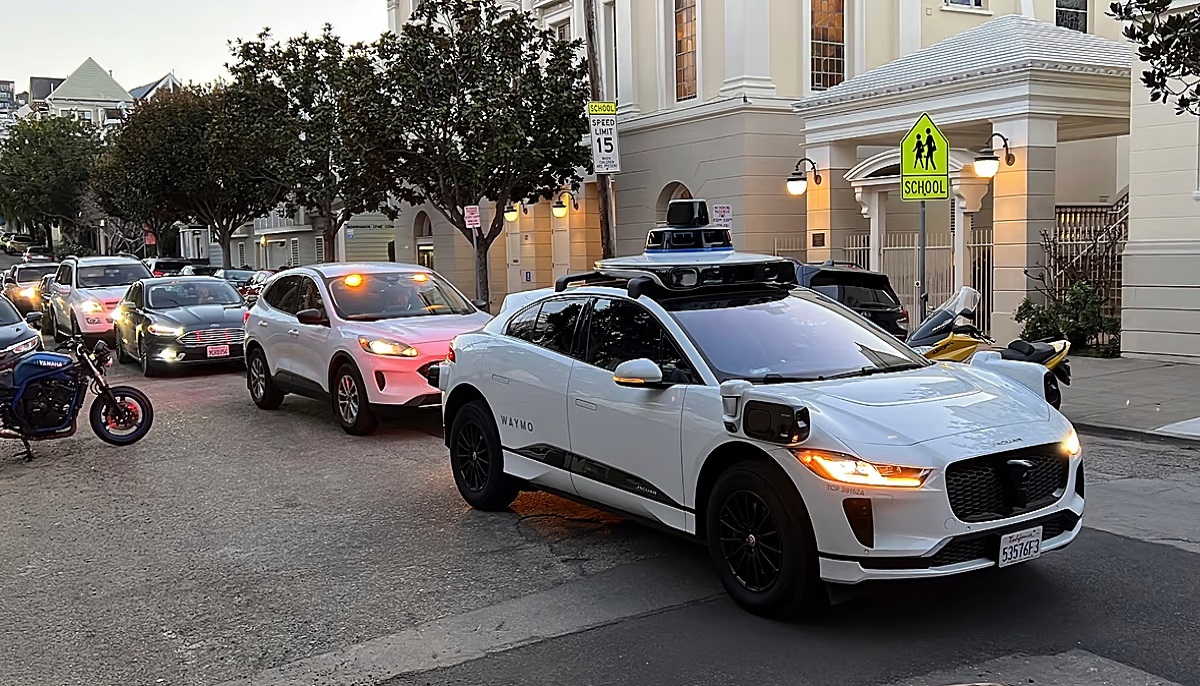
Waymo, Alphabet's autonomous driving arm, is bringing its robotaxi business to Europe with a fully autonomous ride-hailing service in Madrid, Spain, which is slated to begin in 2027.
Waymo said on Tuesday that the city of Madrid will be the first region of operation in Spain. Within the next days, local roads will see electric I-PACE vehicles roam, initially with trained specialists in the driver seat as Waymo works on deploying its technology for driverless use.
The deployment will happen in stages. Waymo will initially operate a manual vehicle to gather data on local traffic, road conditions and on-the-road pedestrians and cyclists. Then the company will run technical validation with the help of trained autonomous-driving experts before moving on to autonomous-driver passengers.
The company said it will collaborate with Spanish authorities at all levels and emergency services agencies ahead of launch. Waymo's testing operations will be done under the framework defined by Spain's Directorate-General for Traffic, or DGT. The company has not yet disclosed how large its Spanish fleet will be or what it will charge passengers.
The move is part of Waymo's larger international expansion plans. The company announced earlier this year it would expand services in London in 2026, Tokyo in 2027 and Toronto in 2028, though it requires local approval and partnerships in some locations. In the US, Waymo is operating in more than 15 locations and says it conducts more than 500,000 paid rides each week.
Waymo reports that its vehicles have driven more than 400 million kilometers entirely autopiloted and experienced 95% fewer accidents resulting in serious injury or death than human drivers in its operating areas. That data is from the company's internal safety evaluation rather than an independent review of the upcoming Madrid service.
Waymo joins a nascent market in Spain for autonomous mobility. The company is not alone in preparing or testing driverless services in Madrid: Uber and Chinese autonomous-driving company WeRide also have been conducting testing and trial services under Spain's autonomous-vehicle rules.
The roll out is another milestone in driverless mobility becoming commercially available. But Waymo must prove its technology can cope with Madrid's complex road infrastructure, busy city centre traffic and interactions with cyclists and pedestrians before fully self-driving rides become available to the general public.