Tesla vs SpaceX: How Musk’s Two Companies Compare as Merger Talks Advance
Ultimately, a merger could bring Musk's interconnected technology ambitions under one corporate structure
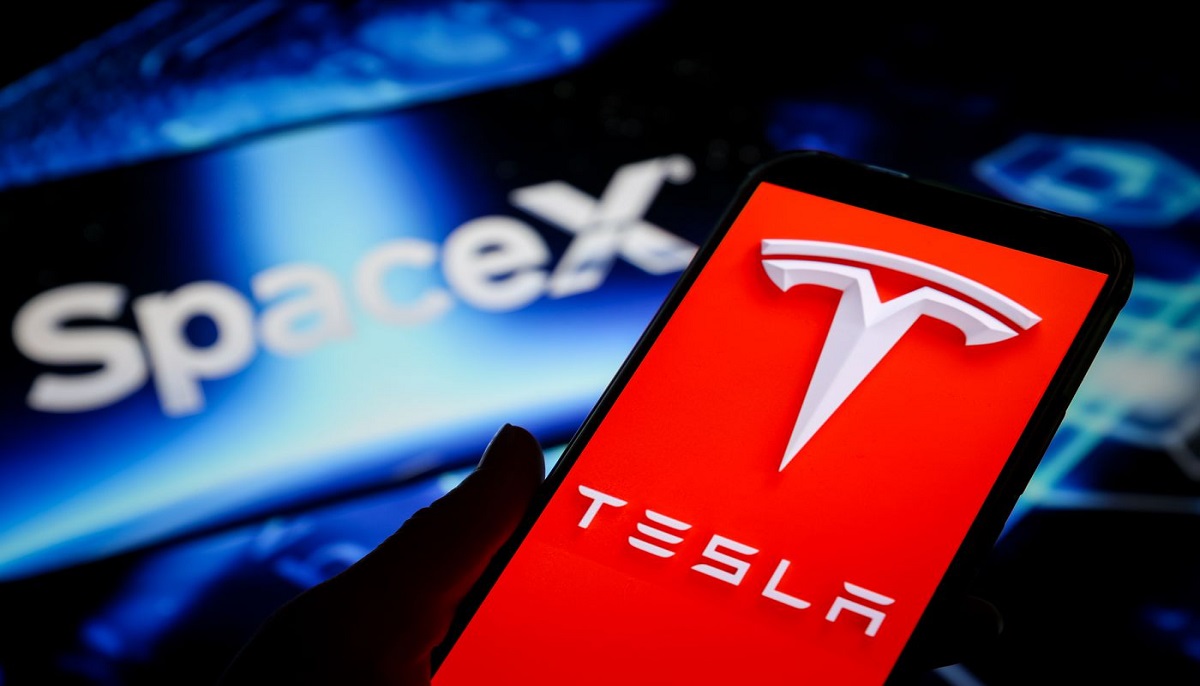
Tesla and SpaceX are exploring the possibility of a merger that could redefine Elon Musk's business holdings, as the two companies' visions for AI, robotics and manufacturing continue to converge.
If agreed upon, the combination would likely establish a company worth around $3.5 trillion, Reuters reported. These companies have formed special committees to look into the deal, but no deal has been reached yet and a merger is not assured.
Tesla: Electric vehicles, energy and robotics
Tesla, an electric vehicle manufacturing company publicly traded, has vehicle sales, battery storage and energy, charging stations, self-driving technology. It has entered the arena of robotaxis, and Optimus robot humanoid robot program as it seeks to wean itself from conventional vehicle manufacturing.
In the nine months of 2026, Tesla accounted for revenue of $78.67 billion and income of $4.3 billion. It also made a positive free cash flow of $1.88 billion, which also created a different profile for the more capital-intensive prospective combining company.
Tesla's stock is tradable, which gives potential investors in the combined automaker a market-price for Tesla shares, however, shareholders would have to evaluate if selling their stake in Tesla for shares in the merged company would be advantageous.
SpaceX: Rockets, Starlink and AI infrastructure
In a separate sector, SpaceX has a suite of businesses, including launching rockets, satellite internet through Starlink, and computing hardware that uses AI. Its launch platforms handle government and commercial launches, and Starlink offer broadband internet services to customers around the world.
For the first nine months of 2026, the rocket and spacecraft maker said it had revenue of $27.08 billion, almost doubling its revenue in Starlink and AI businesses. It had a profit of $4.4 billion in the third quarter, Reuters reports.
Nonetheless, this growth comes with significant costs to pay, as the company spent 48.1 billion dollars on capital expenditure in the first nine months of the year while burning close to 35 billion dollars in cash, which includes SpaceX's AI capacity and Starship and satellite production.
Why merge the firms?
The two firms could using their combined networks cooperate in sharing technology, infrastructure and capital. SpaceX's network of satellites could conceivably allow for control of driverless cars and robotic systems, while Tesla's battery-storage solutions could power high demand computing facilities.
They are already collaborating through Terafab, a semiconductor and AI computing project that aims to provide chips for Tesla's cars and robots and SpaceX's computing efforts. Combining the companies under one roof could make such coordination easier and cut administrative costs.
Still, the union of the two companies would not remove the technical or financial risks. Both are investing in costly projects whose commercial viability is contingent on successful development and commercialization.
Valuation and control remain major obstacles
SpaceX at about $2.16 trillion versus about $1.53 trillion for Tesla. As SpaceX is a private company while Tesla is publicly traded, that would require finding a ratio at which a trade would take place and how to protect Tesla shareholders.
There are also governance issues. For example, Musk owns large parts of both firms, but he is nearly seven times more powerful at SpaceX than at Tesla. Independent committees will have to evaluate the plan and consider conflicts of interests. Musk says he is barred from their deliberations due to these conflicts.
The firms will have to take into account the regulatory review, national security concerns and the varying risks from building cars, from operating space vehicles and from developing AI infrastructure.
In the end, a merger could consolidate Musk's visions of connected technology into a single company. If that delivers durable value remains to be seen and will depend on what valuation is agreed on, how shareholders support it and how the two companies handle their enormous investment commitments.