Putin Praises Elon Musk as Russia Races to Catch Up With Starlink
The Russian project, known as Rassvet, is being developed by Bureau 1440, a Russian aerospace company
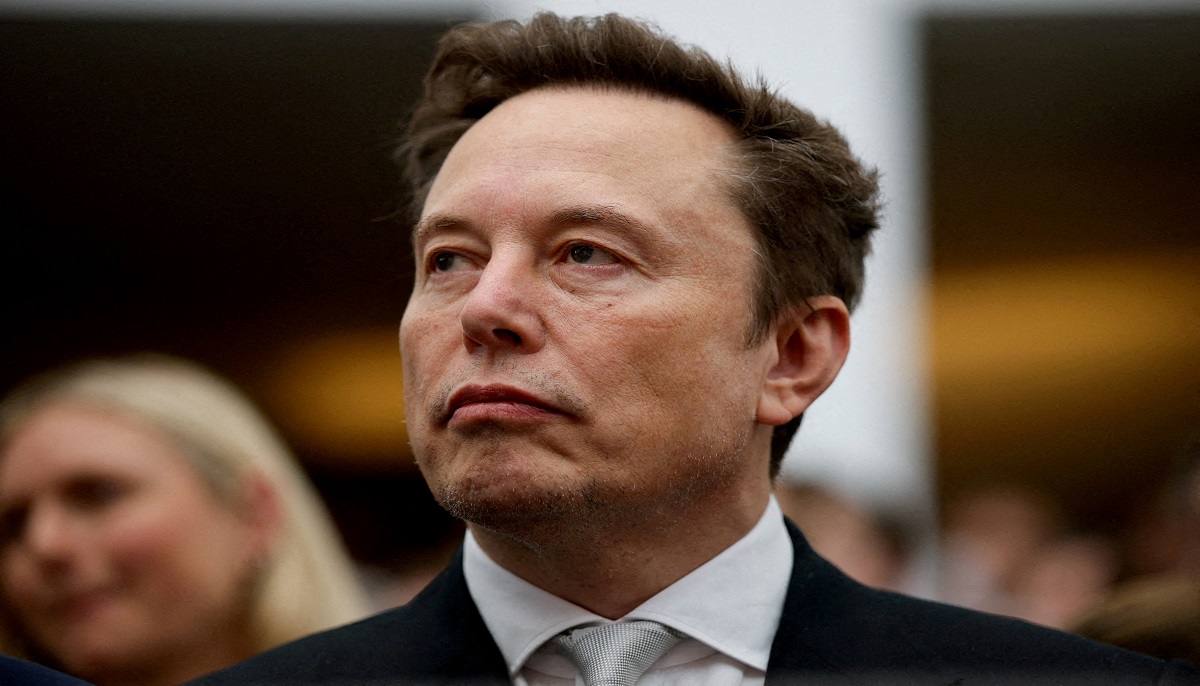
President Vladimir Putin lauded Elon Musk on Wednesday as a "real genius," as Russia seeks to build its own satellite internet network to rival Starlink.
Putin said this when addressing a report by Russia's Digital Development Minister Maksut Shadayev on how the country is progressing with an indigenous low-Earth-orbit satellite constellation. Russia has launched more than 30 satellites for the program, Shadayev added.
Recognising the magnitude of Starlink, Putin said Musk had already built a formidable advantage even as Russia was just starting up its system. The next move for Moscow, he said, was to increase the number of satellites in space and to go from a small advance to a much larger one.
The Russian project, called Rassvet, is being produced by a Russian aerospace company called Bureau 1440. The network will deliver broadband connectivity via satellites flying at a relatively low orbit to Earth - a setup that can help lower lag times in communications versus geostationary systems.
Russia has disclosed that it will need to roll out a much wider network, with commercial service envisioned in 2027. To do that, though, the country will need to put far more satellites into orbit, along with the capability to deliver continuous service.
One of the world's biggest satellite internet networks is run by Musk's SpaceX, called Starlink. It provides services to consumers, businesses and government users, and, its military applications have been especially notable during Russia's war against Ukraine.
Starlink has been a critical communications and drone-platform tool for the Ukrainian military. The recent limitations on service and debates about how the network can be used have exposed the risks of relying on privately owned satellite infrastructure in wartime.
Putin noted that Russia continued working closely with American allies, including Musk, to coordinate activities in space to avoid interference and keep order in the orbit. His remarks followed speeches by African leaders at the Russia-Africa summit in Moscow.
However, Russia will have to work hard to catch up with Starlink in terms of both the number of satellites and the experience. To deploy a comparable network, the country will have to launch satellites repeatedly, develop satellite production, ground components, and maintain the network over vast areas.
The competition shows how satellite internet has shifted from a commercial connectivity product into a strategic tool with wider national security, military and space industry implications. Rassvet, for Russia, is an attempt to break its dependence on other nation's infrastructure - but turning that into a true alternative will require significant resources and time.