EU Lawmakers Demand Security Review of BYD Cars Over Potential China Spying Risks
European lawmakers are urging the European Commission to investigate whether BYD vehicles could pose a cybersecurity threat to the bloc
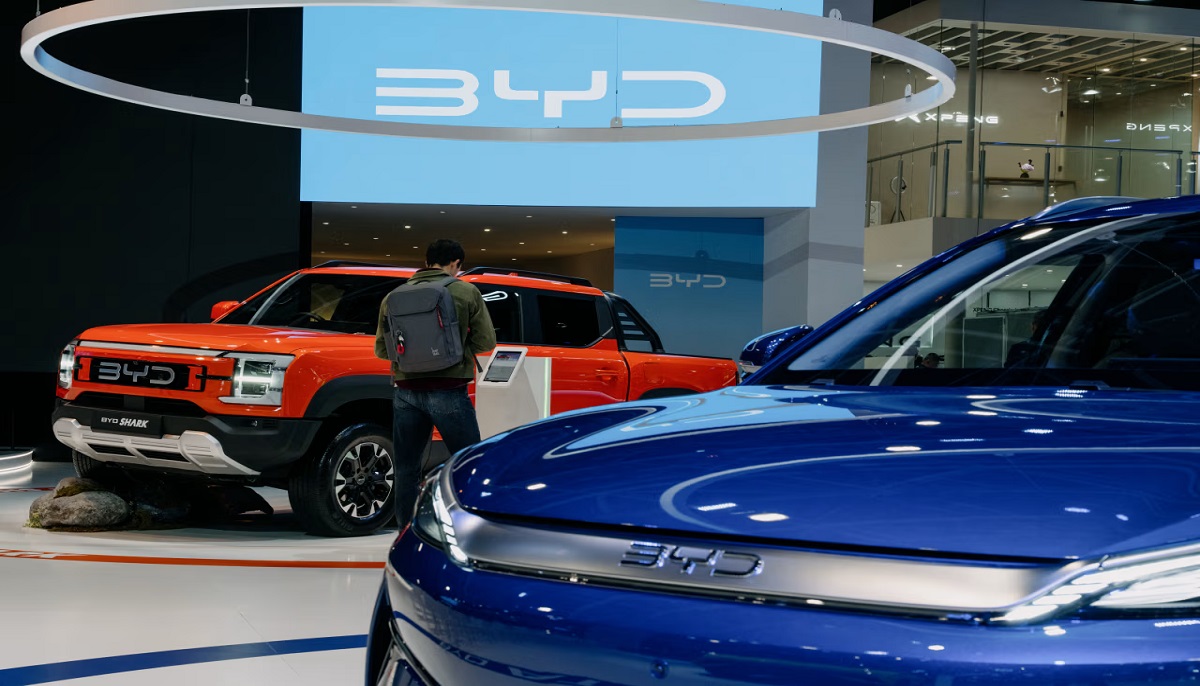
European lawmakers are urging the European Union to consider national security threats posed by cars produced by Chinese car company BYD, reigniting fears over the increasing use of connected cars to gather information.
14 members of the European Parliament have written to the European Commission asking whether BYD cars may be dangerous from a cyber security point of view and whether the Chinese electric vehicle manufacturer should be designated a high-risk supplier. MEPs have asked whether Chinese-made vehicles should be barred from certain public procurement contracts and banned from sensitive government and military sites.
It's sponsored by French legislator François Kalfon, who says that cars are becoming more and more like computers on wheels. Connected cars now have cameras, microphones, sensors, navigation and internet service, so they can collect information about the car and driver, and the environment around them.
They worry that vehicles passing close to army sites or critical infrastructure might inadvertently record sensitive information, such as the locations of important buildings and the movement of troops and security.
These fears also go hand-in-hand with China's 2017 National Intelligence Law that states that all Chinese groups and citizens must assist with and cooperate with national intelligence. The lawmakers are claiming that the law raises the question of how data collected by Chinese manufacturers might be accessed or exploited.
But the accusations do not prove BYD has transferred data to the Chinese authorities. BYD has denied the reports, stating that data stored in its vehicles and cloud-based systems are not accessible by China remotely and are not shared with Chinese or third parties.
The debate has heated up after reports of security restrictions of Chinese vehicles at foreign sensitive sites. A reported decision of US authorities to prohibit BYD vehicles at the US Kadena Air Base in Japan has further spurred European authorities to look at the risk.
The EU has already started to look at wider cybersecurity issues related to connected and automated vehicles. In February 2026, a report on EU cybersecurity evaluated the potential threats from connected and automated vehicles due to the amount of data handled and recommended actions to diminish reliance on potentially risky suppliers.
Now, the lawmakers are pushing for a more detailed analysis of BYD and are urging the European Union Agency for Cybersecurity to assess the risks. In general, the European Commission has about six weeks to reply to written questions from parliamentarians.
Brussels faces a tough dilemma: Ensuring sensitive sites are shielded without unwarranted interference with competition or Europe's increasingly electric car market. Formal restrictions may also have wider consequences for Chinese carmakers looking to extend their reach across the bloc.